
Maintenance
Cooling System & Radiator Repair in Orlando
In Central Florida a cooling system has no slack in it. There is no cool season to hide a marginal radiator or a tired thermostat, so small problems become roadside problems fast.
In Central Florida a cooling system has no slack in it. There is no cool season to hide a marginal radiator or a tired thermostat, so small problems become roadside problems fast.
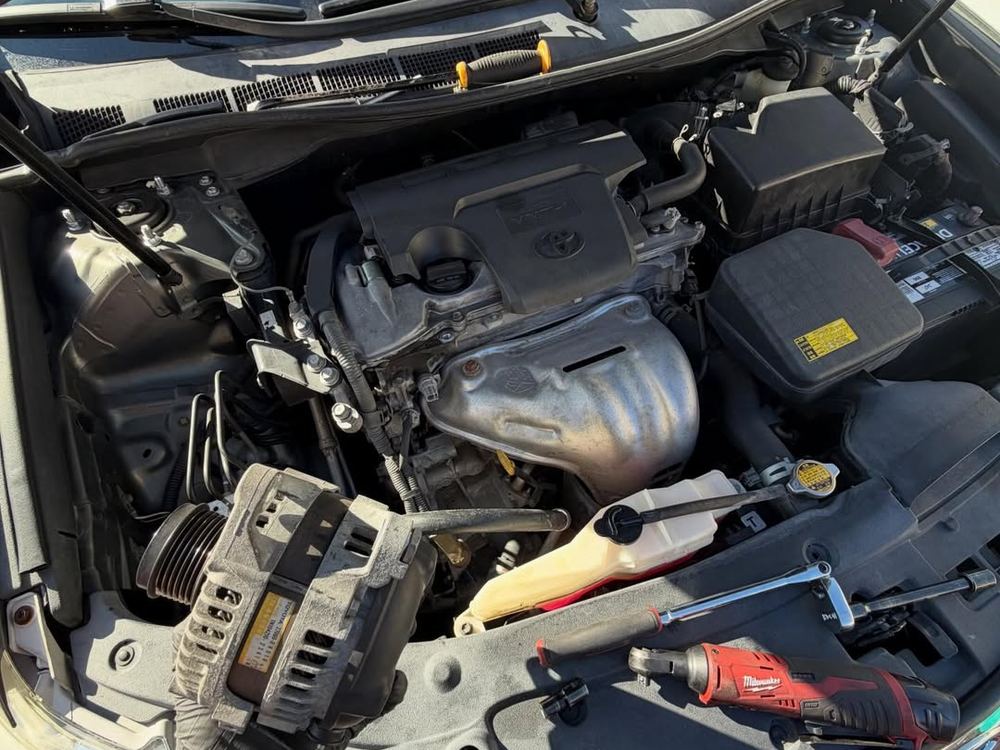
An engine turns roughly a third of its fuel into heat, and the cooling system's only job is to move that heat out before it warps something expensive. In Orlando, that system works year round, in traffic, at a standstill, in ninety-five degree ambient heat with the AC compressor adding load. There is no winter here to give it a break, which is why cooling system failures are one of the most common reasons we get called out.
Overheating is one of the few faults where continuing to drive changes the size of the repair. A stuck thermostat is a modest job. The same car driven ten more minutes can warp a cylinder head or blow a head gasket, which is a different category of bill entirely. Shut it down, let it cool, and get us out to it. Being mobile is exactly the right tool here, because we come to where the car stopped instead of you paying for a tow to a shop.
Coolant is not one product. Modern vehicles specify OAT, HOAT or IAT chemistries, and mixing them can gel the mixture and clog a heater core. We use the specification your manufacturer publishes, not a universal green jug, and we bleed the air out of the system properly afterward. An air pocket trapped at the thermostat will make a perfectly good repair overheat again on the drive home.
Every cooling job ends with the system pressurised and held so we can watch for a pressure drop and inspect every joint we touched. That is how you catch the second, smaller leak that was hiding behind the first one. If the test points somewhere deeper, like a head gasket, you get an honest assessment of what that means rather than a repair that buys you two weeks. Overheating also frequently shows up alongside AC problems, because the same fans serve both.
That pattern points at airflow rather than coolant flow. At speed the radiator gets air whether the fans work or not. In traffic it depends entirely on the electric fans, so a failed fan, relay or fan control module is the usual answer.
In most cases yes. We bring coolant, containment for the old fluid, and the tools to bleed the system properly. Some engines bury the radiator behind the front bumper cover, which adds time, and we will say so upfront.
Only as a get-off-the-road emergency measure. Water alone boils at a lower temperature, does not protect against corrosion, and will damage the system over time. We will drain it and refill with the correct coolant.
Commonly every 5 to 10 years or 100,000 miles depending on the chemistry, but Florida heat is hard on it. We test the coolant's condition and protection rather than going purely on the calendar.
That is a classic failing heater core, leaking coolant into the cabin. It needs attention because you are breathing it, and because the system is losing coolant.
Oil, brakes, batteries, AC, diagnostics and no-starts, done in your driveway across Orlando, Lake Nona, St. Cloud and Kissimmee. Upfront price before we start.