
Roadside
Mobile Tire Service in Orlando & Lake Nona
A flat in the heat on the shoulder of the 417 is nobody's afternoon. We come to the car, sort the tire, and check why it went flat in the first place.
A flat in the heat on the shoulder of the 417 is nobody's afternoon. We come to the car, sort the tire, and check why it went flat in the first place.
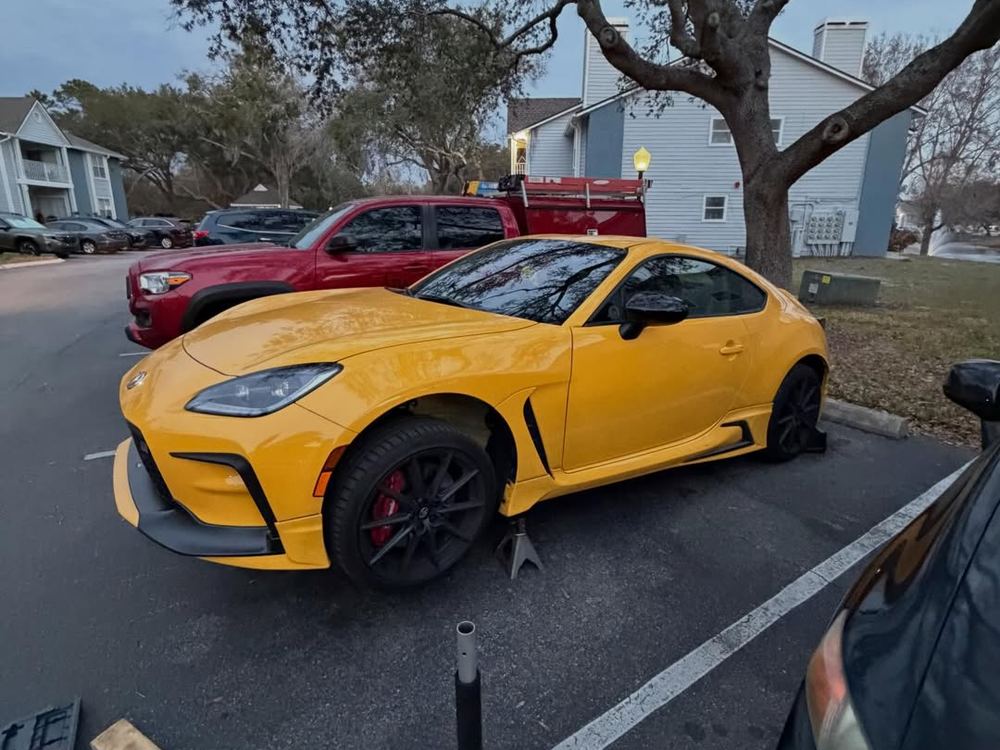
Tires are the only part of your car that actually touches the road, and they are the part most people check least. We handle flat repair, spare fitting, rotation, pressure and TPMS service at your home, your office or wherever the car is sitting.
Industry standards are clear on this. A puncture can be properly repaired if it is in the tread area, no larger than a quarter of an inch, and the tire has not been run flat. Damage in the sidewall or the shoulder cannot be safely repaired, full stop, because that area flexes constantly and no repair holds. A plug jammed in from the outside without dismounting the tire is not a proper repair either, it is a temporary measure. If your tire needs replacing we will tell you it needs replacing, even though a repair would have been the easier sale.
Two things get overlooked here. First, heat raises pressure, so pressure should always be set cold, before driving, not after a hot run. Second, tires age out. Ultraviolet exposure and heat break down the rubber compound whether you drive on it or not, and a six year old tire with beautiful tread can still be unsafe. Every tire has a four digit DOT date code on the sidewall telling you the week and year it was built. We read it, and if your tires are aged out we will show you where the number is so you can see it yourself. This matters hugely for cars that sit, and for the spare that has been under the boot floor since the car was new.
Tires report on the rest of the car. Wear on both edges means chronic underinflation. Wear in the centre means overinflation. Wear on one edge only means alignment or a worn suspension joint. A scalloped, cupped pattern means the dampers are no longer controlling the wheel. We read the pattern and tell you what it is pointing at, which usually means suspension and steering. Note that we do not mount and balance new tires on site, that requires a tire machine and a balancer, and we will be straight with you about when you need a tire shop.
In most cases yes, provided the puncture is in the tread area and within repairable size. If it is in the sidewall or the tire was driven flat, it needs replacing and we will tell you honestly rather than selling you a repair that will not hold.
We fit and repair, but mounting and balancing new tires needs a tire machine and a balancer, which is shop equipment. We will tell you exactly what you need and get you rolling safely on the spare in the meantime.
Roughly every 5,000 to 7,500 miles, which lines up neatly with a full synthetic oil change, so we usually do both in one visit.
TPMS sensors have batteries and they last around five to ten years. A dead sensor sets the light regardless of actual pressure. We can read each sensor individually and tell you which one has stopped reporting.
Many manufacturers advise replacement at six to ten years regardless of tread. In Florida sun and heat, treat the lower end of that range as realistic. The DOT date code on the sidewall tells you the week and year it was made.
Oil, brakes, batteries, AC, diagnostics and no-starts, done in your driveway across Orlando, Lake Nona, St. Cloud and Kissimmee. Upfront price before we start.